
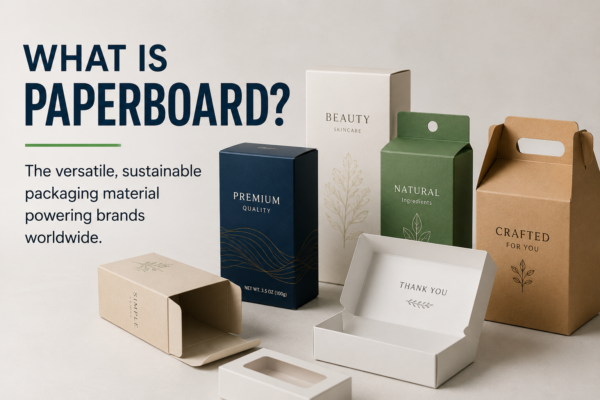
A Beginner’s Guide to One of Packaging’s Most Versatile Materials
Many people use the terms paper and paperboard interchangeably, but they are not the same. Paperboard combines strength, printability, and sustainability, making it one of the packaging industry’s most versatile materials. As more brands transition toward fiber-based packaging, the global paperboard packaging market continues to grow. Industry forecasts project the market will increase from around $222 billion in 2025 to more than $238 billion in 2026, reflecting continued demand for fiber-based packaging solutions. Manufacturers use paperboard in everything from cosmetic cartons and food packaging to retail displays and luxury product boxes because it delivers an ideal balance of performance, presentation, and environmental responsibility.
What Is Paperboard?
Paperboard is a thick, paper-based material made from virgin wood fibers, recycled fibers, or a combination of both. Manufacturers engineer it to provide rigidity while keeping it lightweight and easy to cut, fold, score, and print.
Instead of relying on basis weight alone, manufacturers typically specify paperboard by its caliper, or thickness. They can also choose from a wide range of calipers, coatings, and finishes to meet the structural and visual requirements of virtually any packaging project.
Common Types of Paperboard
Not all paperboard grades offer the same characteristics. Manufacturers develop each grade to deliver specific benefits based on the product, printing requirements, and intended application.
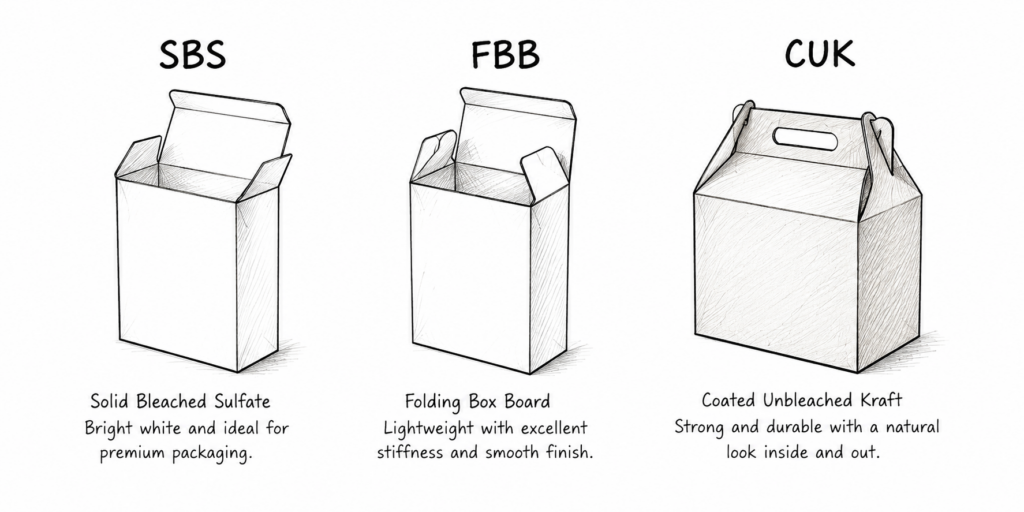
Solid Bleached Sulfate (SBS) features a bright white surface and outstanding print quality, making it a popular choice for cosmetics, pharmaceuticals, and premium retail packaging.
Folding Box Board (FBB) combines lightweight construction with excellent stiffness, making it well suited for food packaging, beauty products, and other consumer goods.
Coated Unbleached Kraft (CUK) delivers exceptional strength and durability while maintaining a natural kraft appearance, making it an ideal choice for beverage carriers and heavier retail packaging.
Fun Fact
More than half of all paper and cardboard produced worldwide is used for packaging. As a result, paperboard has become one of the most important materials in the global packaging industry, serving everything from cereal boxes and cosmetics to electronics, pharmaceuticals, and luxury retail products.
Where Is Paperboard Used?
One of paperboard’s biggest advantages is its versatility. Manufacturers can transform it into thousands of structural designs while achieving outstanding print quality and shelf appeal.
Common applications include:
- Folding cartons
- Cosmetic packaging
- Food and beverage cartons
- Pharmaceutical packaging
- Retail product boxes
- Subscription boxes
- Point-of-purchase displays
- Custom sleeves and inserts
Additionally, because it accepts a wide variety of coatings, embossing, foils, and specialty finishes, paperboard can be engineered for everything from everyday consumer products to luxury packaging.
Is Paperboard Sustainable?
Paperboard is considered one of today’s most environmentally responsible packaging materials. Therefore, many grades are produced using renewable wood fiber and recycled content and are widely recyclable after use.
Many manufacturers also source FSC® certified paperboard, helping ensure fiber comes from responsibly managed forests and verified supply chains. Combined with lightweight shipping and excellent printability, paperboard remains a popular choice for brands looking to reduce environmental impact without sacrificing appearance.
As a certified FSC printer, Calitho brings materials and creativity together, helping brands choose the right paperboard to turn bold ideas into standout packaging. Let’s get started today!